.svg)

Rethinking Application Onboarding: A Value-Based Approach for Real Business Impact (2025 Navigate Session Recap)
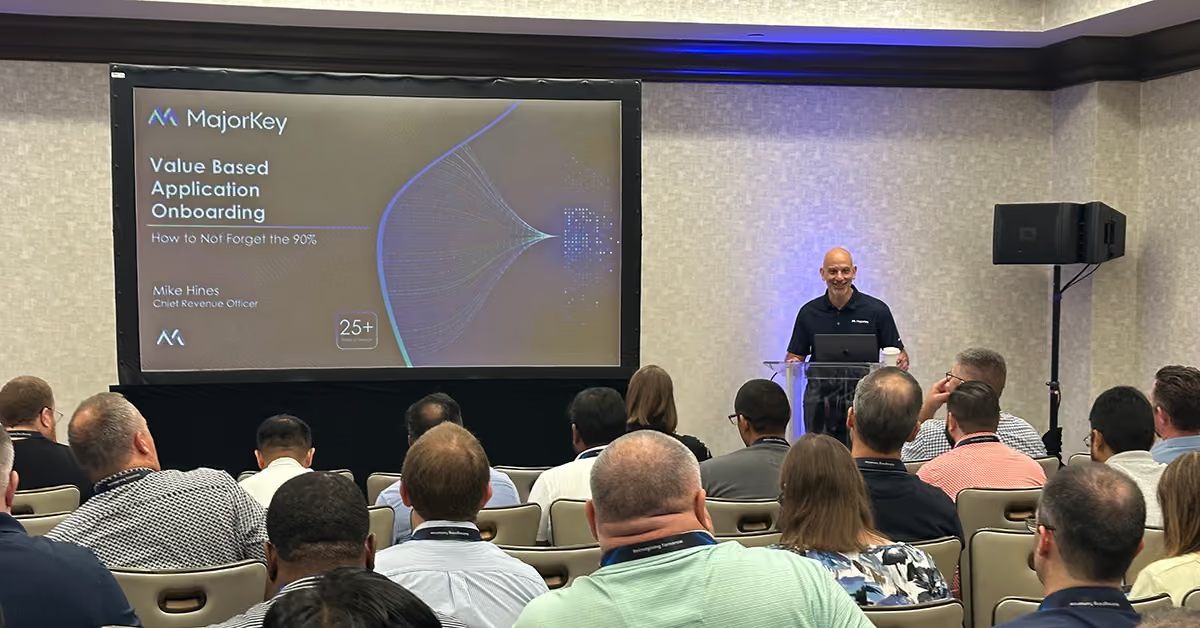
At this year’s SailPoint Navigate, the conversation around identity programs centered on a critical topic: application onboarding. At MajorKey Technologies, we focus on driving a value-based approach to app onboarding that’s transforming the way organizations achieve ROI from their identity initiatives.
We explored this topic in depth during my session, “The Forgotten 90%: Reimagining App Onboarding Through KPI-Driven Strategies”. If you couldn’t attend the live presentation, don’t worry - keep reading to discover how we’re reshaping the future of app onboarding.
The Traditional Onboarding Challenge
Let’s face it: every organization embarking on an identity modernization journey aims to bring all applications into a centralized identity platform. The benefits are clear, improved security, compliance, and reporting. But here’s the reality I see time and again: the process starts strong, focusing on the highest-risk, most regulated systems. These “must-do” apps get all the attention, but they’re also the most complex and time-consuming to onboard.
As weeks go by, bottlenecks emerge. Approvals stall, documentation is missing, and only the most critical, audit-worthy applications make it through. Meanwhile, the tools that business users rely on, the ones that drive real value, get pushed to the back of the line. Shadow IT grows, business stakeholders get frustrated, and the promise of transformation turns into a compliance-driven gatekeeping exercise. In fact, only about 10% of applications ever get fully onboarded, leaving the remaining 90%,often the most valuable, neglected and invisible.
Why Value-Based Onboarding Matters
At MajorKey, we believe it’s time for a shift. Our value-based application onboarding methodology is designed to democratize decision-making and prioritize the applications that matter most to the business, not just those that check a compliance box.
Here’s what we’re seeing in the field:
- Capacity Gaps: Too many applications, not enough resources.
- Information Gaps: Legacy or homegrown apps with missing documentation and lost tribal knowledge.
- Process Friction: Manual steps that slow everything down and introduce errors.
- Visibility Voids: Lack of transparency into where apps are in the onboarding process.
These challenges stall business value and keep IT and the business out of sync.
Our Four Pillars for Success
So, how do we break the cycle? We’ve developed a four-pillar approach:
1) Collaborative Inventory
You can’t govern what you don’t know. We build a comprehensive, collaborative inventory of all applications, democratizing the process by giving business stakeholders a voice.
2) Distributed Sponsorship
We secure buy-in from application owners and key business leaders, ensuring everyone has skin in the game and feels heard.
3) Intelligent Automation
We automate not just the technical steps, but also the process of gathering input and building consensus—avoiding the trap of automating broken processes.
4) Real-Time Value Tracking
We provide dashboards and KPIs that give stakeholders visibility into progress, ROI, and predictable outcomes.
Putting It Into Practice
Our process starts with discovery: identifying every application in use. We then use our OrchestratID solution to automate outreach, inviting business stakeholders to vote on which apps deliver the most value. This creates a priority list based on real business needs, not just compliance mandates.
With tools like MajorKey’s IdentityLens, we offer real-time dashboards so everyone knows where their applications stand in the onboarding journey. This transparency builds trust, sets expectations, and ensures IT is seen as a true business partner.
What Good Looks Like
Success means distributed accountability, responsive IT, and business stakeholders who feel empowered and engaged. It’s about moving from a compliance-centric, stalled process to a value-driven, business-speed approach to application onboarding.
If you’re ready to rethink how your organization approaches application onboarding and unlock real ROI, let’s connect. Together, we can build a stronger partnership between business and IT and drive meaningful transformation.
Authors



.svg)